Edwin Ogie Library is a platform for education, personal development, and meaningful growth. Through articles, books, and learning resources, we explore language, emotional awareness, self-understanding, healthy relationships, and practical ways to face life's challenges. Our mission is to help readers communicate clearly, manage emotions wisely, strengthen connections, and build lives guided by knowledge, confidence, peace, and personal responsibility for a more thoughtful and fulfilling life.
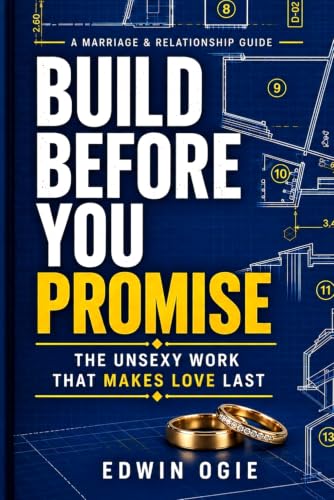
Edwin Ogie Library | Book Spotlight Build Before You Promise: The Inner Work Behind a Lasting Commitment Lasting commitment requires more than good intentions. It asks you to understand yourself, confront difficult patterns, and prepare for the responsibilities your promises will bring. By Edwin Ogie • Edwin Ogie Library There is a difference between wanting a lasting relationship and preparing yourself to sustain one. The desire may be sincere. The feelings may be strong. The future may look promising. Yet a meaningful commitment can still expose parts of us that we have never taken the time to understand. Sometimes, people make promises based on what they feel today without fully examining the habits, expectations, fears, and unresolved difficulties they will carry into tomorrow. They imagine the future they want but spend little time preparing for the responsibilities that future will demand. This...
Get link
Facebook
X
Pinterest
Email
Other Apps
The Difference Between Wanting a Relationship and Being Ready for One
The Difference Between Wanting a Relationship and Being Ready for One
You can sincerely desire love and still need to prepare yourself for the responsibility, patience and emotional work that a healthy relationship requires.
Many people want a relationship. They want someone to talk to at the end of a difficult day, someone who remembers the little things, someone to share their plans with and someone who makes life feel less lonely. They imagine the comfort of being loved and the happiness of building a future together.
There is nothing wrong with these desires. Wanting companionship is natural, and wanting to be loved does not make you weak or incomplete.
However, there is an important question we do not always ask ourselves: Am I ready for the responsibilities of the relationship I want?
Wanting a relationship describes what you desire to experience. Being ready for one involves examining what you are prepared to contribute, how you handle difficulties and whether you are willing to grow alongside another person.
The difference matters because a relationship does not consist only of the moments we imagine before it begins. It also includes misunderstandings, changing circumstances, difficult conversations, competing needs and responsibilities that cannot always be postponed until we feel better.
You may sincerely want love while still learning how to communicate your feelings, manage disappointment or take responsibility for your mistakes. Recognising this does not mean you are unworthy of love. It means you have an opportunity to prepare yourself more intentionally.
1. Wanting Love Is Not the Same as Knowing How to Give It
It is easy to describe the kind of partner we want. We may want someone who is patient, honest, supportive, emotionally available and committed. We may have a clear picture of the qualities that would make us feel loved.
But have we examined whether we are developing those qualities ourselves?
Someone may want a patient partner but become angry whenever a conversation does not go their way. Another person may want honesty but hide their own mistakes because they fear the consequences. Someone may expect emotional support while refusing to listen when their partner needs to talk.
These contradictions do not necessarily mean that a person is deliberately dishonest. Sometimes we understand what we need from others before we have developed the ability to offer the same consideration.
Consider Daniel. Daniel wants a woman who communicates openly and does not hide her feelings. Yet whenever a woman he is dating raises a concern, he immediately becomes defensive. He interprets her questions as criticism and tries to end the discussion as quickly as possible.
Daniel genuinely wants a close relationship. However, until he learns to listen without treating every uncomfortable conversation as an attack, the kind of closeness he desires may be difficult to sustain.
The lesson is not that you must become perfect before dating. It is that the qualities you hope to receive from a partner are also worth developing within yourself.
2. Are You Looking for a Partner or Someone to Rescue You From Loneliness?
Loneliness can make companionship feel urgent. When you have spent a long time feeling alone, the attention of another person may appear to offer relief from almost every difficulty you are experiencing.
You may begin to believe that once you enter a relationship, your confidence will improve, your sadness will disappear and your life will finally feel complete.
A loving relationship can bring joy, encouragement and support. But placing the entire responsibility for your emotional well-being on another person can create pressure neither of you can comfortably carry.
Your partner may have a difficult day. They may need time alone, become busy with work or struggle with a problem of their own. If you expect them to be constantly available to reassure you, ordinary periods of distance may begin to feel like rejection.
Being ready for a relationship does not mean you must never feel lonely. It means learning to acknowledge loneliness without allowing it to make every decision for you.
Build friendships, develop meaningful interests, attend to your responsibilities and learn how to care for yourself. A relationship can become an important part of your life without becoming the only source of your identity and stability.
3. Can You Handle Disappointment Without Punishing the Other Person?
Every relationship involves moments when expectations are not met. Your partner may forget something important, misunderstand what you meant or disagree with a decision you care about.
How you respond to these moments can reveal more about your readiness than how you behave when everything is going well.
When disappointed, do you explain what hurt you? Do you become silent and expect the other person to guess what is wrong? Do you use insults, threats or affection as a way to make them feel guilty?
Emotional readiness includes learning to express disappointment without deliberately creating more pain. You should be able to raise a concern, listen to the other person's explanation and decide what needs to happen next.
This does not mean accepting repeated disrespect. Healthy communication includes boundaries and consequences when necessary. It simply means that anger does not have to become a weapon.
4. Are You Prepared to Take Responsibility for Your Own Behaviour?
It is tempting to explain our mistakes by focusing on what another person did first. We may say we shouted because they annoyed us, lied because we were afraid, or withdrew because they failed to understand us.
Other people's behaviour can influence our feelings, but it does not remove our responsibility for our choices.
Being ready for a relationship means being able to recognise when you have contributed to a problem. It means apologising without adding an excuse that cancels the apology. It means making an effort to change a behaviour rather than repeatedly promising that things will be different.
An honest response sounds like this: "I was hurt by what happened, but I should not have spoken to you that way. I am sorry. I still want us to discuss the original issue, but I need to take responsibility for how I handled it."
This response does not surrender every concern. It acknowledges one person's responsibility while leaving room to discuss the other issue.
You do not need to be free from all mistakes before entering a relationship. You do need a willingness to acknowledge them, repair the harm you cause and learn from experience.
5. Can You Discuss Difficult Subjects Without Avoiding Them?
At the beginning of a relationship, pleasant conversations often come naturally. You talk about your interests, plans, favourite experiences and hopes for the future.
But serious commitment eventually raises questions that require more than attraction. How do you handle money? What are your expectations about family responsibilities? How do you approach disagreements? What does faith mean to you? How do you understand fidelity, privacy, boundaries and personal growth?
Two people do not need identical opinions on every subject. They do, however, need enough honesty and respect to explore important differences before those differences become sources of repeated conflict.
If you avoid every uncomfortable conversation because you fear losing the person, you may be protecting the relationship's present appearance at the expense of its future stability.
Readiness includes the courage to ask reasonable questions, listen to answers you may not prefer and decide whether your expectations and values can work together.
6. Do You Know the Difference Between Love and Compatibility?
You can care deeply about someone and still discover that your expectations for the future are incompatible. Attraction and affection are important, but they do not automatically resolve differences in values, lifestyle, finances, family responsibilities or long-term goals.
For example, one person may hope to have children while the other does not. One may expect to relocate for work while the other has a strong commitment to staying near family. These are not necessarily questions that can be solved by loving each other more intensely.
Being ready means giving serious differences the attention they deserve instead of assuming everything will work out after marriage.
It also means recognising that compatibility is not about finding a person who agrees with everything you say. It is about understanding whether you can build a respectful life together while dealing honestly with your differences.
7. Are You Willing to Keep Growing After the Relationship Begins?
Some people treat finding a partner as the end of their preparation. Once the relationship becomes official, they assume that love will carry the two people through whatever follows.
But a relationship is not a certificate proving that personal growth is complete. It is an ongoing experience in which both people continue to learn about themselves and each other.
You may discover that you struggle with jealousy, impatience, criticism or fear when life becomes uncertain. Your partner may discover habits they need to work on as well. What matters is whether both of you are willing to reflect honestly and make practical changes.
Growth also involves maintaining the parts of your life that make you a responsible and balanced person. Continue learning, taking care of your health, fulfilling your obligations and developing your abilities. A healthy relationship should make room for two people to grow, not require either person to abandon their identity.
8. Being Ready Does Not Mean Being Perfect
It is important not to turn relationship readiness into another impossible standard. Nobody enters a relationship with complete emotional understanding or flawless communication skills.
You can be ready to build a relationship while still having areas to improve. The question is not whether you have solved every personal challenge. The question is whether you recognise your responsibilities and are prepared to work on them.
There is a difference between a person who says, "I know I struggle with anger, and I am learning healthier ways to deal with it," and a person who says, "That is just how I am. Anyone who loves me must accept it."
The first person acknowledges a difficulty and accepts responsibility for growth. The second uses personal identity as a reason to avoid change.
Readiness is not perfection. It is self-awareness combined with responsibility, honesty and a willingness to learn.
9. Do Not Use a Relationship to Avoid the Work You Need to Do
Sometimes people enter relationships while hoping the experience will distract them from difficult questions about their own lives. They may be struggling with unresolved anger, poor boundaries, financial irresponsibility or a lack of direction and expect a partner to make those concerns disappear.
A relationship can provide encouragement, but it cannot do all your personal work for you.
If you struggle to manage money, for instance, sharing finances with another person will not automatically make you responsible. If you cannot communicate during conflict, marriage will not guarantee that you suddenly acquire the skill. If you rely on constant approval to feel valuable, a partner's reassurance may help temporarily without addressing the deeper pattern.
Take responsibility for the areas you can begin improving now. You can seek advice, develop better habits, learn communication skills and ask for professional help where appropriate.
You do not have to postpone every relationship until your life is perfectly organised. But you should be honest with yourself about what you are bringing into the relationship and what you are prepared to work on.
10. Prepare for the Reality of Commitment, Not Just the Feeling of Being in Love
Attraction can make a new relationship feel exciting. Commitment asks what happens after the excitement settles into ordinary life.
Will you still communicate respectfully when you disagree? Can you discuss responsibilities without treating every request as an insult? Are you willing to address problems before resentment grows? Can you remain honest when telling the truth is uncomfortable?
These questions matter because lasting relationships are shaped by repeated actions, not only by the strength of the feelings that begin them.
Before making a serious promise, take time to understand yourself, understand the other person and examine the practical responsibilities that commitment will involve.
Prepare for the conversations you may find difficult. Examine the habits that may affect your partner. Be honest about your expectations, limits and intentions.
Most importantly, remember that choosing someone is only one part of building a relationship. You must also be willing to become a person who contributes to its health and stability.
Reflection Questions: Are You Ready for a Relationship?
Answer these questions honestly. They are not a test you must pass perfectly. They are a way to understand where you are and what you may need to develop.
Do I want a relationship because I am ready to share my life, or mainly because I am tired of being alone?
Can I express disappointment without insulting, threatening or punishing another person?
Am I willing to take responsibility when my behaviour contributes to a problem?
Can I discuss difficult subjects even when the answers may challenge my expectations?
Do I have a realistic understanding of the responsibilities and compromises that commitment requires?
What is one habit I should begin improving before making a serious promise?
Your Commitment for This Week
Choose one area of personal growth that could improve your future relationships. It might be listening without interrupting, managing frustration, keeping your word, setting healthy boundaries or becoming more honest about your feelings.
Do not settle for simply promising yourself that you will improve. Choose one action you can practise this week. If you struggle to listen, make a conscious effort to hear someone out before responding. If you avoid difficult conversations, identify one concern you need to address respectfully.
Small actions will not solve every challenge, but they can begin to build the habits that support a healthier relationship.
The Important Difference
Wanting a relationship is about your desire for love, companionship and shared experiences. Being ready for one means accepting that a healthy relationship also calls for self-awareness, communication, responsibility and continued growth.
You do not have to become perfect before you deserve love. You do need to understand that another person is not simply entering your life to satisfy your expectations. They are bringing their own hopes, needs, weaknesses and responsibilities.
Before asking whether you have found the right person, take time to ask whether you are preparing yourself to build the kind of relationship you hope to have.
Build yourself. Understand yourself. Prepare yourself. Then make a promise you are willing to work to keep.
Continue Your Relationship Readiness Journey
Build Before You Promise
The Unsexy Work That Makes Love Last
This book explores the inner preparation behind lasting commitment: understanding yourself, managing emotions, facing difficult issues and developing the personal responsibility needed to build a healthier relationship.
Amazon availability and displayed prices may vary by marketplace and format.
Frequently Asked Questions
What is the difference between wanting a relationship and being ready for one?
Wanting a relationship means desiring love, companionship or commitment. Being ready involves recognising the responsibilities of a relationship and being willing to practise healthy communication, emotional awareness, honesty and accountability.
How do I know if I am emotionally ready for a relationship?
Consider whether you can communicate your feelings, manage disappointment without deliberately hurting others, respect boundaries, take responsibility for mistakes and discuss difficult subjects honestly. These are skills you can continue developing rather than a requirement to be perfect.
Should I wait until my life is completely sorted out before dating?
No. Life rarely becomes completely free of challenges. The important thing is to understand your current responsibilities, be honest with a potential partner and take reasonable steps to address problems that may affect the relationship.
Can love help someone become emotionally mature?
A supportive relationship can encourage growth, but each person must take responsibility for their own behaviour. Love alone does not automatically resolve harmful habits, communication difficulties or unresolved personal challenges.
What should I work on before making a serious commitment?
Start with self-awareness, emotional regulation, honest communication, reliability, healthy boundaries and the ability to take responsibility after mistakes. Discuss expectations about money, family, children, values and future goals before making major commitments.
Share This Article
Know someone thinking about a serious relationship? Share this article to encourage a thoughtful conversation about readiness and commitment.
Written by Edwin Ogie
Edwin Ogie Library
Exploring relationships, emotional growth, personal responsibility and the preparation required for lasting commitment.
FORGIVENESS THE SECRET TO A SUCCESSFUL RELATIONSHIP Forgiveness is a critical aspect of human relationships, particularly in marriage. Treating others with mercy and leniency requires you to overlook misunderstandings and the wrongs they have done to you. The capacity to forgive is a fundamental virtue that is the linchpin of safeguarding relationships and leading a flourishing life. Lack of forgiveness causes lots of damage to marriages, and it is often the root cause of divorce in our society. It is, therefore, vital to understand that forgiveness is the key to a lasting, successful, and fulfilling marriage. Before embarking on the journey of marriage, individuals should take responsibility and learn to know themselves deeply. It is essential to realize that marriage is not a walk in the park. It requires perseverance, tenacity, and a loving spirit from the partners involved. When hurt arises, forgiveness is an indispensable tool that partners must employ to calm their difference...
EO Navigating Life’s Complexities Through Self-Consciousness A practical, story-driven guide to building mental resilience, clarity and better relationships in daily life. Expand all Collapse all Print Download .doc Introduction What is Self-Consciousness? Why it Matters The Nigerian Context Stories in Action Root Causes Upbringing & Environment Strategies to Grow Applications Exercises & Plans Scripts & Conversation Frames Resources Conclusion Introduction In a world of constant noise, stress, and social pressure, developing self-consciousness — the steady ability to notice yourself and choose — is essential. This post explains what it is, why it matters (especially in Nigeria), and how to build it with concrete stories...
Mastering the Art of Present Steps for Future Triumphs" In the pursuit of victory, every step forward is pivotal. It's essential to navigate your present position with care, for it is the springboard to your future achievements. How you handle your current endeavors directly impacts the path to your next conquests. Attempting to bypass or disregard your present circumstances can undermine your success in the steps that follow. In the realm of business, strategic maneuvering is essential to attaining your desired goals. Step into Consciousness: Harnessing Experience for Future Benefits Experience serves as our greatest teacher, guiding us towards tomorrow's rewards. Often, we fall into the trap of assuming the world revolves around us, treating our current situations with indifference and overlooking their implications for future outcomes. It's crucial to be mindful of how we approach our present steps, recognizing their significance in shaping tomorrow's victories....

Comments
Post a Comment
We’d love to hear from you! Share your thoughts or questions below. Please keep comments positive and meaningful, Comments are welcome — we moderate for spam and civility; please be respectful.