Edwin Ogie Library is a platform for education, personal development, and meaningful growth. Through articles, books, and learning resources, we explore language, emotional awareness, self-understanding, healthy relationships, and practical ways to face life's challenges. Our mission is to help readers communicate clearly, manage emotions wisely, strengthen connections, and build lives guided by knowledge, confidence, peace, and personal responsibility for a more thoughtful and fulfilling life.
Edwin Ogie Library | Book Spotlight Build Before You Promise: The Inner Work Behind a Lasting Commitment Lasting commitment requires more than good intentions. It asks you to understand yourself, confront difficult patterns, and prepare for the responsibilities your promises will bring. By Edwin Ogie • Edwin Ogie Library There is a difference between wanting a lasting relationship and preparing yourself to sustain one. The desire may be sincere. The feelings may be strong. The future may look promising. Yet a meaningful commitment can still expose parts of us that we have never taken the time to understand. Sometimes, people make promises based on what they feel today without fully examining the habits, expectations, fears, and unresolved difficulties they will carry into tomorrow. They imagine the future they want but spend little time preparing for the responsibilities that future will demand. This...
Get link
Facebook
X
Pinterest
Email
Other Apps
How to Stop Reacting Emotionally to Everything That Upsets You
How to Stop Reacting Emotionally to Everything That Upsets You
You may not control every situation you encounter, but you can learn to respond with greater awareness, self-control and wisdom.
Have you ever sent a message in anger and regretted it minutes later? Have you ever allowed one careless comment to ruin your entire day? Perhaps someone corrected you, disappointed you or failed to meet your expectations, and your reaction was stronger than you intended.
These experiences are common. We all have moments when our emotions rise faster than our ability to think clearly. The difficulty begins when almost every disappointment becomes an argument, every criticism feels like an attack, or every inconvenience determines our mood for the rest of the day.
Emotions are part of being human. Feeling hurt, angry, disappointed, anxious or frustrated does not automatically mean something is wrong with you. The important question is what you do with those feelings.
Emotional mastery does not mean becoming cold, pretending to be happy or suppressing everything you feel. It means learning to recognise your emotions without allowing every emotion to make your decisions.
1. Understand That Feeling Something Does Not Require an Immediate Reaction
One of the most valuable emotional skills is learning to create a little space between what you feel and what you do.
Someone may speak to you disrespectfully, and anger may rise immediately. That feeling is real. However, you still have choices about your next action. You can insult the person, walk away temporarily, explain what was inappropriate or wait until you can speak calmly.
The emotion may appear quickly, but your response does not have to follow automatically.
Consider this situation: Your colleague criticises your work in front of other people. You feel embarrassed and want to respond with an equally embarrassing comment.
Instead of speaking immediately, take a breath and ask yourself what outcome you want. Do you want to defend your work, understand the criticism or set a boundary about how feedback should be given? Choosing your purpose helps you respond more effectively.
Pausing is not weakness. It is a way of protecting your judgement from a moment of intense emotion.
2. Identify What Is Actually Upsetting You
Sometimes the immediate event is only one part of the story. A small disappointment may touch a deeper concern. Perhaps you feel overlooked, disrespected, unappreciated or afraid of being rejected.
For example, a friend cancels a meeting at short notice. You become unusually angry. Beneath that anger may be the feeling that your time does not matter or that you are not a priority.
Understanding the underlying feeling does not mean your interpretation is necessarily correct. It simply gives you more information about yourself and what needs to be discussed.
When you become upset, ask yourself: What exactly hurt me? Was it the person's action, what I believe it means, or a fear that it brought to the surface?
The clearer you become about the source of your reaction, the easier it becomes to decide what needs attention.
3. Separate Facts From Assumptions
Our minds often interpret events before we have all the information. A delayed reply can become proof that someone no longer cares. A disagreement can feel like rejection. A mistake can become evidence that we are failures.
But an interpretation is not always a fact.
Imagine you send someone an important message and receive no reply for several hours. The fact is that you have not received a reply. The assumption might be that the person is deliberately ignoring you.
That assumption may eventually prove correct, but you do not yet know enough to treat it as certain.
Practise asking, "What do I know for sure, and what am I assuming?" This simple question can prevent many unnecessary arguments and help you communicate without accusing someone based on incomplete information.
4. Learn to Recognise Your Emotional Triggers
An emotional trigger is a situation, interaction or reminder that produces a strong emotional response. Different people have different triggers. Some become especially sensitive to criticism, while others struggle with being ignored, feeling controlled or believing they have disappointed someone.
Recognising your triggers helps you prepare instead of repeatedly being surprised by your own reactions.
You might notice that you become defensive whenever someone points out an error. Perhaps you grew accustomed to criticism being delivered harshly. Or you may discover that you become frustrated when plans change because uncertainty makes you uncomfortable.
You do not need to discover a dramatic explanation for every emotional reaction. Sometimes you are simply tired, hungry, under pressure or having a difficult day. Awareness means examining the circumstances without rushing to blame yourself or another person.
5. Use a Pause Before You Speak or Act
When emotions are intense, your first response may not be your wisest response. Give yourself enough time to settle before making a decision, sending a message or continuing a heated discussion.
Try This Four-Step Pause
Stop: Avoid sending the angry message or making the immediate accusation.
Breathe: Take a few slow, comfortable breaths and notice the tension in your body.
Name the feeling: Tell yourself, "I feel hurt," "I feel frustrated," or "I am worried."
Choose your response: Decide what needs to be said or done after considering the facts and the likely consequences.
If you need more time, say so respectfully. For example: "I am upset, and I do not want us to hurt each other with our words. Let me settle down, and then we can talk about this."
Make sure you return to the conversation when you say you will, provided it is safe to do so. A pause should help you handle the issue, not become a way to avoid every difficult discussion.
6. Stop Expecting Everyone to Behave Exactly as You Would
Some emotional frustration comes from expecting people to think, communicate and respond exactly as we do. We may expect others to notice what we need without being told, remember what matters to us or approach a disagreement in the same way we would.
When they do not, we may become angry or disappointed.
People have different personalities, experiences, priorities and communication habits. Understanding those differences does not require you to accept dishonesty, disrespect or repeated harm. It simply means distinguishing between genuine misconduct and ordinary differences in how people approach life.
Where possible, explain your expectations clearly instead of assuming that another person should automatically understand them. Where an expectation cannot reasonably be met, consider whether you need to adjust it, negotiate or set a boundary.
7. Communicate Your Feelings Without Attacking People
Emotional control is not about remaining silent whenever something bothers you. Silence can allow resentment to grow when a concern needs to be addressed.
The goal is to express what you feel in a way that makes understanding more likely.
Compare these two statements:
Attacking: "You never respect me. You only care about yourself."
More constructive: "I felt dismissed when I was interrupted earlier. I would like to finish explaining my point before we respond to each other."
The second statement identifies the behaviour, explains its effect and makes a clear request. It does not guarantee that the other person will respond well, but it gives the conversation a better chance of being productive.
You can be firm without being cruel. You can disagree without humiliating someone. You can express anger without using it to frighten or control another person.
8. Accept That Not Every Disappointment Needs a Fight
Some matters require a serious conversation. Others require a reasonable adjustment, a little patience or a decision to let go.
If someone deliberately violates an important boundary, you may need to address it directly. But if a person makes a minor mistake, misunderstands your intention or occasionally disappoints you, an argument may not be the most useful response.
Before reacting, ask yourself: Will this matter tomorrow? Does it involve a genuine boundary, a repeated pattern or a misunderstanding that can be clarified? What response is most likely to improve the situation?
Letting go of a minor irritation is not the same as tolerating harmful behaviour. Wisdom includes knowing the difference.
9. Take Responsibility After an Emotional Mistake
Even with practice, there will be moments when you react badly. You may raise your voice, make an unfair assumption or say something intended to hurt another person.
When that happens, do not spend all your energy defending the reaction. Acknowledge what you did, apologise where appropriate and think about what you can do differently next time.
A sincere apology might sound like this: "I was frustrated, but that does not excuse the way I spoke to you. I am sorry. Next time, I will take a break before continuing the conversation."
Taking responsibility does not require you to accept all the blame in a disagreement. It means owning the part that genuinely belongs to you.
Emotional growth is not measured by never making a mistake. It is also measured by how honestly you learn from one.
10. Practise Emotional Control Before Difficult Moments Arise
It is easier to practise emotional skills when you are calm than when you are already overwhelmed. Build small habits into ordinary life.
Spend a few minutes reflecting on situations that upset you. Notice your sleep, stress levels and other pressures. Practise listening without interrupting. Learn to disagree respectfully. Give yourself permission to ask for a break before a discussion becomes hurtful.
When an upsetting situation occurs, review it afterwards. What did you feel? What did you assume? How did you respond? What would you like to try differently next time?
These questions are not meant to turn every day into a personal examination. They are simple ways of learning from experience instead of repeating the same reaction without reflection.
Emotional Mastery Begins With Self-Awareness
You cannot prevent every disappointment, misunderstanding or difficult interaction. Other people will sometimes behave in ways you dislike. Plans will change. Some expectations will not be met.
But you can develop a healthier relationship with your own emotions. You can learn to notice anger without allowing it to dictate your words. You can feel hurt without immediately assuming the worst. You can stand up for yourself without deliberately hurting another person.
This work takes practice. If your reactions regularly feel uncontrollable or are connected to overwhelming distress, seeking support from a qualified mental health professional can be a helpful step. You do not have to work through every difficulty alone.
The goal is not to stop feeling. It is to become more thoughtful about what you do with what you feel.
Your Reflection Questions
What kinds of situations cause me to react more strongly than I would like?
Do I sometimes confuse my assumptions with facts?
What usually happens when I speak while angry or frustrated?
Which technique could help me pause before responding?
What is one emotional habit I will practise changing this week?
Your Commitment for This Week
Choose one situation that commonly upsets you. The next time it happens, practise pausing before responding. Name what you feel, separate the facts from your assumptions, and choose a response that reflects the person you want to become.
You may not get it right every time. Keep practising. Every moment in which you choose a more thoughtful response is an opportunity to strengthen your emotional skills.
Continue Your Personal Growth
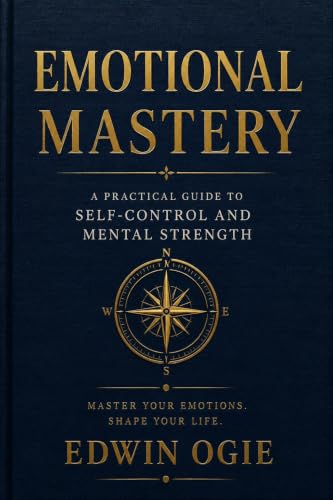
Emotional Mastery
Discover ideas to help you develop self-awareness, strengthen self-control and respond more thoughtfully to life's challenges.
Check the Amazon listing for current availability, format and price.
Frequently Asked Questions
Why do I react emotionally to small things?
Strong reactions can be influenced by stress, fatigue, past experiences, unmet expectations or feeling overwhelmed. A small event may also touch a concern that matters deeply to you. Notice the pattern and explore what may be contributing to it before judging yourself.
How can I control my emotions when I am angry?
Pause before speaking, take a few comfortable breaths, name what you are feeling and give yourself time to think. If the discussion becomes too heated, explain that you need a break and agree to return to it when calmer.
Does emotional mastery mean suppressing my feelings?
No. Emotional mastery involves recognising and understanding emotions while choosing how to respond. Suppressing feelings or pretending that nothing bothers you is different from expressing yourself thoughtfully.
How long does it take to become emotionally mature?
There is no fixed timeline. Emotional maturity develops through practice, reflection, feedback and learning from mistakes. Progress may be gradual, and seeking professional support may help when emotional difficulties are persistent or overwhelming.
Can emotional reactions damage relationships?
Repeated insults, impulsive accusations, threats or hostile behaviour can weaken trust. Learning to pause, communicate respectfully and take responsibility after mistakes can support healthier relationships. Both people remain responsible for their own behaviour.
Share This Article
Help someone discover practical ways to respond more thoughtfully to difficult situations.
Written by Edwin Ogie
Edwin Ogie Library
Exploring emotional growth, relationships, self-awareness and personal responsibility.
FORGIVENESS THE SECRET TO A SUCCESSFUL RELATIONSHIP Forgiveness is a critical aspect of human relationships, particularly in marriage. Treating others with mercy and leniency requires you to overlook misunderstandings and the wrongs they have done to you. The capacity to forgive is a fundamental virtue that is the linchpin of safeguarding relationships and leading a flourishing life. Lack of forgiveness causes lots of damage to marriages, and it is often the root cause of divorce in our society. It is, therefore, vital to understand that forgiveness is the key to a lasting, successful, and fulfilling marriage. Before embarking on the journey of marriage, individuals should take responsibility and learn to know themselves deeply. It is essential to realize that marriage is not a walk in the park. It requires perseverance, tenacity, and a loving spirit from the partners involved. When hurt arises, forgiveness is an indispensable tool that partners must employ to calm their difference...
EO Navigating Life’s Complexities Through Self-Consciousness A practical, story-driven guide to building mental resilience, clarity and better relationships in daily life. Expand all Collapse all Print Download .doc Introduction What is Self-Consciousness? Why it Matters The Nigerian Context Stories in Action Root Causes Upbringing & Environment Strategies to Grow Applications Exercises & Plans Scripts & Conversation Frames Resources Conclusion Introduction In a world of constant noise, stress, and social pressure, developing self-consciousness — the steady ability to notice yourself and choose — is essential. This post explains what it is, why it matters (especially in Nigeria), and how to build it with concrete stories...
Mastering the Art of Present Steps for Future Triumphs" In the pursuit of victory, every step forward is pivotal. It's essential to navigate your present position with care, for it is the springboard to your future achievements. How you handle your current endeavors directly impacts the path to your next conquests. Attempting to bypass or disregard your present circumstances can undermine your success in the steps that follow. In the realm of business, strategic maneuvering is essential to attaining your desired goals. Step into Consciousness: Harnessing Experience for Future Benefits Experience serves as our greatest teacher, guiding us towards tomorrow's rewards. Often, we fall into the trap of assuming the world revolves around us, treating our current situations with indifference and overlooking their implications for future outcomes. It's crucial to be mindful of how we approach our present steps, recognizing their significance in shaping tomorrow's victories....

Comments
Post a Comment
We’d love to hear from you! Share your thoughts or questions below. Please keep comments positive and meaningful, Comments are welcome — we moderate for spam and civility; please be respectful.