By Edwin Ogie · Edwin Ogie Library
Marriage is a major decision, yet many people spend more time preparing for the wedding than preparing for the relationship that follows it. They think about the ceremony, the clothes, the guests, the house and the plans for the future. These things matter, but there is another question worth asking: Am I emotionally prepared to share my life with another person?
Emotional readiness does not mean that you have solved every problem, eliminated every weakness or reached a point where nothing upsets you. No one enters marriage as a completely finished person. It means that you are becoming aware of yourself, willing to take responsibility for your behaviour and ready to keep learning how to love another person well.
You may love someone sincerely and still have important work to do before making a lifelong commitment. Recognising this is not a failure. It is a responsible place to begin.
A useful principle: Do not measure your readiness for marriage only by how strongly you feel about someone. Consider how you handle responsibility, disappointment, disagreement, communication and the parts of yourself that need growth.
7 Signs You May Be Emotionally Ready for Marriage
1. You Can Take Responsibility for Your Actions
In a healthy relationship, you will sometimes get things wrong. You may speak harshly, misunderstand your partner, forget an important responsibility or react badly under pressure.
Readiness shows in what happens next. Can you acknowledge your part without blaming your upbringing, your partner's behaviour or the stress of the moment for everything? Can you apologise sincerely and make a practical change?
Taking responsibility does not mean accepting blame for everything. It means being honest about the part that belongs to you. A marriage becomes harder to repair when both people spend all their energy proving that the other person is the problem.
2. You Are Learning to Manage Your Emotions
Emotional maturity does not mean never feeling anger, jealousy, sadness, fear or disappointment. These emotions are part of being human. The important question is how you respond to them.
When you are angry, can you pause before saying something intended to wound? When you feel insecure, can you explain what is troubling you instead of using accusations or control? When you are disappointed, can you express it without making your partner responsible for every feeling you experience?
You do not need perfect self-control to get married. You do need a willingness to recognise your emotions and manage your behaviour, especially during difficult moments.
3. You Can Communicate Honestly and Listen Carefully
Love cannot depend on one person guessing what the other needs. Lasting relationships require honest conversations about expectations, fears, finances, family responsibilities, personal values and future plans.
Ask yourself whether you can speak about a difficult subject without immediately becoming defensive. Can you listen to a different opinion without assuming that you are being attacked? Can you ask questions when something is unclear instead of making conclusions based on assumptions?
Good communication is not simply the ability to talk. It is the ability to express yourself clearly, listen with care and work towards understanding, even when you do not agree.
4. You Understand That Conflict Requires Work
Every couple will encounter differences. Two people may have different habits, preferences, family backgrounds, ways of expressing affection and expectations about daily life. Disagreement alone does not mean a relationship is failing.
What matters is whether the relationship allows both people to speak honestly and work through disagreements without intimidation, humiliation, threats or violence.
If every disagreement becomes a contest that someone must win, marriage may turn ordinary differences into recurring battles. Learning to pause, return to difficult conversations and seek fair solutions is part of preparing for commitment.
Where there is abuse, coercion or a credible threat to safety, protecting yourself and seeking appropriate support must come before attempts to resolve the conflict together.
5. You Have a Sense of Identity Beyond the Relationship
A relationship can be an important part of your life without becoming the whole of your identity. Emotional readiness includes knowing something about your values, priorities, limits and personal goals.
If you believe you must abandon every friendship, interest, boundary or personal conviction to prove your love, you may be confusing devotion with losing yourself.
A healthy commitment makes room for two people to build a shared life while still treating each other as individuals. You can be willing to compromise without surrendering your dignity or expecting your partner to surrender theirs.
6. You Are Prepared for Practical Responsibilities
Marriage is not sustained by affection alone. Everyday life brings decisions about income, spending, saving, household work, parenting, extended family, time, health and future plans.
You do not need to have a perfect financial position or own a house before marriage. However, you should be willing to discuss your real circumstances honestly. Hiding debt, making promises you cannot reasonably keep or avoiding every conversation about responsibility can create problems later.
Readiness means being prepared to plan together, share responsibilities fairly and discuss expectations before those expectations become sources of resentment.
7. You Choose Commitment for the Right Reasons
People may feel pressure to marry because friends are getting married, family members are asking questions, age is advancing or they fear being alone. These pressures can make a relationship feel like an emergency decision.
It is worth asking whether you are choosing this person because you have developed a clear understanding of each other, or because you hope marriage will solve an unrelated problem in your life.
Marriage should not be treated as a guaranteed cure for loneliness, insecurity, mistrust or a partner's unresolved difficulties. It can provide companionship and support, but both people still have responsibilities for their own growth and for the relationship they are creating together.
Signs You May Need More Preparation Before Marriage
Being emotionally unprepared is not a permanent label. It is information you can use to make wiser decisions. Consider taking more time to prepare if you recognise patterns such as these:
- You expect marriage to change a partner's behaviour without evidence that they want to change.
- You struggle to accept responsibility and regularly blame others for your reactions.
- You avoid honest conversations about money, children, family expectations or personal values.
- You use threats, insults, prolonged silence or emotional pressure to get your way.
- You feel compelled to marry mainly because of pressure, fear or the belief that you may not find someone else.
- You are hiding important information that could affect your partner's decision to marry you.
One difficult moment does not automatically mean you are unready. What deserves attention is a repeated pattern that you refuse to acknowledge or address. If a problem is serious, persistent or unsafe, consider getting suitable professional support before proceeding.
Questions to Ask Yourself Before Saying “I Do”
Take some quiet time to answer these questions honestly. You do not need impressive answers. You need truthful ones.
- When I am upset, how do I usually treat the people closest to me?
- Can I admit when I am wrong without turning the conversation into a defence of myself?
- Have we discussed money, children, family involvement, faith or values, and our expectations of married life?
- Can we disagree without either person feeling afraid, belittled or controlled?
- Am I willing to change unhealthy habits, rather than expecting my partner to adjust to all of them?
- Do I know the important things about my partner that I need to know before making this commitment?
- Would I still consider this marriage a wise choice if I removed pressure from family, friends and society?
Do not use these questions to create an impossible standard of perfection. Use them to identify the conversations and areas of growth that deserve your attention. It can be helpful to answer them separately and then discuss your responses calmly with your partner.
A Practical Way to Prepare Before Marriage
Instead of waiting until every concern becomes a crisis, set aside time for intentional preparation. You might begin with four steps:
First, examine yourself. Identify your recurring reactions, fears, expectations and habits. Be specific about the changes you want to make.
Second, have honest conversations. Discuss the subjects that will shape your shared life. Do not assume that love means you automatically agree about money, children, household responsibilities, family boundaries or long-term plans.
Third, practise a different response. If you tend to react in anger, work on pausing before responding. If you avoid difficult conversations, practise addressing one concern respectfully. Good intentions become more meaningful when they lead to consistent behaviour.
Fourth, seek guidance when needed. Premarital counselling or a suitably qualified counsellor can help you explore important questions and recognise patterns you may find difficult to see alone. Choose someone who respects your dignity and takes safety concerns seriously.
You do not have to complete all personal growth before you can love someone well. But you should be willing to do the work that makes your love safer, more responsible and more dependable.
Prepare the Person Who Will Make the Promise
It is natural to spend time asking whether you have found the right person. That question matters, but another question deserves equal attention: Am I becoming the kind of person who can contribute to a healthy relationship?
You cannot control every decision your future spouse will make. You cannot guarantee that life will remain easy or that disagreements will disappear. What you can do is build greater self-awareness, learn to communicate responsibly, become more honest about your limitations and prepare to handle difficulties without abandoning respect.
That kind of preparation does not remove every risk from marriage. It gives you a stronger foundation from which to face the realities of commitment.
A Book to Help You Think More Deeply About Readiness
This is the central idea behind Build Before You Promise: The Unsexy Work That Makes Love Last by Edwin Ogie. The book is not about constructing a physical building. It is about the inner work that helps a person become more self-aware, balanced and prepared before making a serious promise to another person.
It explores the preparation that can happen before commitment: understanding yourself, examining your emotional patterns, dealing with difficult issues and learning to take responsibility for the person you bring into a relationship.
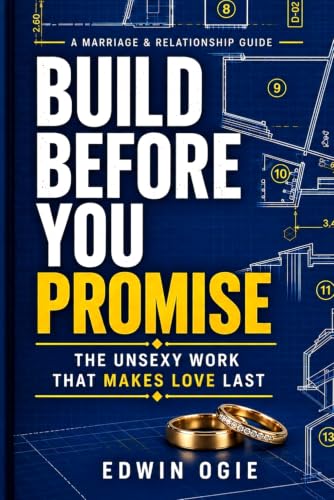
A book by Edwin Ogie
Build Before You Promise
The Unsexy Work That Makes Love Last
Explore the inner work behind emotional readiness, responsibility and lasting commitment.
Paperback price shown: $13.99
Get Your Copy on Amazon
Price and availability may vary by Amazon marketplace.
Frequently Asked Questions
1. How do I know if I am emotionally ready for marriage?
Look at how you manage emotions, communicate, handle disagreements, accept responsibility and discuss practical expectations. Readiness is not perfection; it is a willingness to face challenges honestly and keep growing.
2. Can two people grow emotionally after getting married?
Yes. People can learn and mature throughout marriage. However, both partners need a willingness to take responsibility, communicate and address problems. Marriage itself does not automatically create emotional maturity.
3. Should I postpone marriage if I have personal weaknesses?
Not every weakness requires postponement. Consider the seriousness of the issue, whether it affects your partner's safety or informed consent, and whether you are taking meaningful steps to address it. Persistent abuse, major dishonesty or unresolved issues that seriously affect the relationship deserve careful attention before commitment.
4. What should couples discuss before marriage?
Important subjects include finances, children, family boundaries, personal values, faith where relevant, household responsibilities, career plans, communication, conflict resolution and expectations of commitment.
5. Is love enough to prepare someone for marriage?
Love is important, but a healthy marriage also requires respect, honesty, responsibility, practical planning, communication and a willingness to work through difficulties. Strong feelings are not a substitute for these everyday responsibilities.
Before You Say Forever
Before making a lifelong promise, give yourself the opportunity to understand the person making that promise. Examine your habits. Discuss the difficult subjects. Be honest about what you know and what you still need to learn.
Build yourself. Understand yourself. Prepare yourself. Then make a promise you are willing to work to keep.
What do you believe couples should discuss before getting married? Share your thoughts in the comments. Your experience may help another reader prepare more wisely.
About the Author
Edwin Ogie is the author of books on relationships, emotional growth, self-worth and personal development. Through Edwin Ogie Library, he shares practical ideas to help readers understand themselves, communicate more thoughtfully and approach life's important decisions with greater care.
Explore Edwin Ogie's books on Amazon

Comments
Post a Comment
We’d love to hear from you! Share your thoughts or questions below. Please keep comments positive and meaningful, Comments are welcome — we moderate for spam and civility; please be respectful.